Rodent Exclusion & Trapping Cost Factors and Service Scope Rodent exclusion differs fundamentally from generic rodent baiting. Poison baiting leaves carcasses inside inaccessible wall voids where 85-degree subtropical…
<h3>Rodent Exclusion & Trapping Cost Factors and Service Scope</h3>
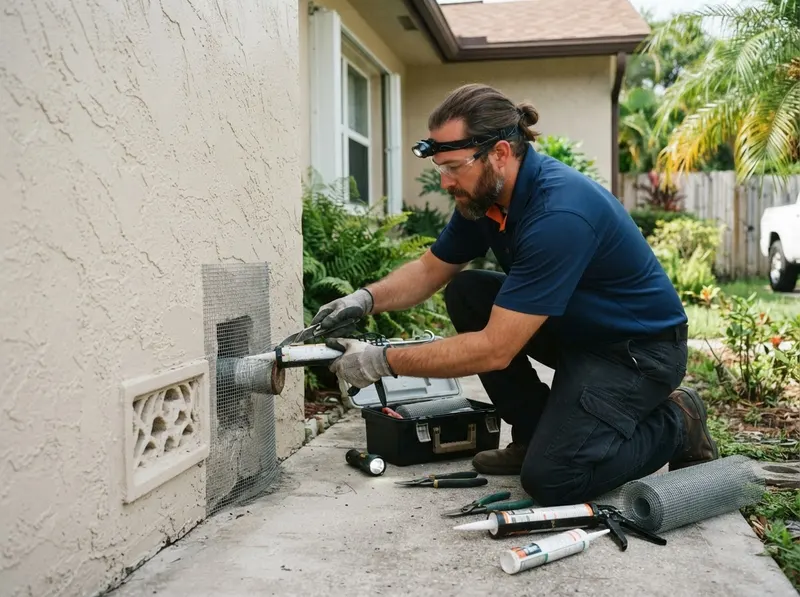
Rodent exclusion differs fundamentally from generic rodent baiting. Poison baiting leaves carcasses inside inaccessible wall voids where 85-degree subtropical heat triggers severe odor and secondary fly infestations within 48 hours. By contrast, mechanical exclusion seals structural breaches permanently while lethal snap traps capture existing interior intruders for immediate physical removal.
In coastal South Florida, roof rats exploit mature palm canopies and overhead utility drops to access fascia boards, soffits, and architectural barrel tile vents. The standard minimum fee for single-breach sealing and short-term trapping runs $250, while comprehensive home fortification typically ranges between $450 and $1,850 depending on structural square footage, roof pitch, and architectural complexity. 5 inches (the width of a standard nickel).
gov/">National Weather Service accelerates wood rot along roof decking in older Corals and Central Corals properties, creating effortless access corridors for pests. In modern gated communities like Lake Ridge Falls or water-facing homes along the Middle River canal corridors in Royal Palm Isles, rodents travel utility pathways, seawalls, and overhanging tree lines to bypass perimeter defenses.
<h3>Defensive Materials and Mechanical Fortification Standards</h3>Effective residential defense relies on industrial-grade exclusion hardware rather than basic expanding foam, which rodents gnaw through in under 20 minutes.
org/">ASTM International standards across soffit openings, roof vents, and weep screeds. gov/">National Institute of Standards and Technology durability benchmarks are used alongside copper mesh to secure masonry transitions and electrical chases. gov/">US Environmental Protection Agency.
<h3>The Multi-Step Rodent Exclusion and Trapping Sequence</h3>The defense sequence proceeds through four sequential phases: 1. Exterior and interior breach audit, measuring every perimeter penetration from foundation footing to ridge caps. 2.
Mechanical fortification, fastening galvanized hardware cloth, metal flashing, and escutcheon plates around pipe entries. 3. Interior lethal trapping deployment, placing specialized mechanical traps along attic pathways, garage perimeters, and utility rooms.
4.
<h3>Local Regulations, Wildlife Protection, and Neighborhood Dynamics</h3>Rodent exclusion projects in Oakland Forest or Prospect Park must account for native wildlife ecosystems, particularly near public green spaces like Easterlin Park, Wimberly Field, and Stevens Field where municipal parks border residential fences. com/">Florida Fish and Wildlife Conservation Commission to ensure non-target species like marsh rabbits and native birds are safeguarded.
org/">Broward County sanitation directives mandate that property owners eliminate active rodent harborage.
Every job gets a firm, written price after a free on-site visit.
For standards, safe disposal, and service guidance on pest control services in Oakland Park, FL, useful references include U.S. EPA, ENERGY STAR, U.S. Dept. of Energy, Consumer.gov, U.S. Census Bureau, and Google Maps. General consumer and small-business resources are available from USA.gov, Better Business Bureau, FTC Consumer Advice, U.S. Small Business Administration, and Ready.gov.
Tell us about your rodent exclusion & trapping job in Oakland Park and we'll send a clear, written quote, usually the same day.
 HomeFront Pest Solutions